Here's a preview of the Minneapolis Murals Project I'm working on. I used Google Fusion Tables to create this map. I'll be able to add other projects to the same map as they come on line. I'll only publish the murals now because it's the one project where the audio is actually ready.
Soon the audio will be available on-site via SMS/phone and hopefully we'll get a mobile web site up as well.
Showing posts with label audio. Show all posts
Showing posts with label audio. Show all posts
Thursday, May 26, 2011


Saturday, March 13, 2010
Art and audio in the aisles
Grocery stores are dizzying places. So many choices. So much information. Flashy packaging. Conflicting priorities. I've stood staring and hopeless at the wall of soup cans too many times to count. Do I choose price or flavor or nutrition or ingredient or serving size or natural or local? If Donovan McNabb's mother eats this soup, shouldn't I?
 So how nice would it be if someone replaced those voices in my head with an artful, musical take on the grocery store experience? Apparently, Rotozaza has done that. The UK-based artists have produced a half-hour audio tour of the supermarket -- ANY supermarket with more than 10 aisles.
Director Silvia Mecuriali is quoted in this Australian newspaper story:
But here's what's interesting. This is a placecast that isn't tied to a specific place, but rather to a KIND of place. The audience has to be somewhere to appreciate it, but not necessarily in the same place it was recorded. This works because grocery stores in much of the world now have more similarities than differences -- a fact worthy of reflection in itself.
This isn't historical interpretation, but rather societal deconstruction. And audio is still the perfect medium. "Wearing headphones and anonymous behind your trolley [shopping cart]," the project's Web site says, "you are guided around the aisles immersed in a private world, as the carefully constructed sound scape overlays a fictional world that blurs the real with the imaginary."
 Using sound as the primary medium allows the audience to still participate in the physical world, while their thoughts about that place are being directed and informed by the audio program. There's no need to stare at a smartphone screen or tap away on a laptop keyboard.
What other places in our world are similar enough for this kind of placecast? Would it work anywhere beyond the homogeneous world of retail stores, fast food joints...maybe airports?
I'll explore this whole concept further, driven in part by this intriguing line from the Rotozaza Wondermart press release:
(photos by Ant Hampton via Rotozaza)

Director Silvia Mecuriali is quoted in this Australian newspaper story:
“It plays around with the ideas of consumerism, reclaiming public space and using it in a different way,” Mercuriali said.
“It takes a mischievous swipe at the dominance of supermarket culture and consumerism.”
But you don’t have to buy anything and the people around you become extras in your own private “guerrilla-style” show.
The 30-minute tour guides the shopper through food sections, with the music changing to reflect the frozen food area, dairy, and fruit and vegetables.I'll review the audio if I can get a copy -- right now it's only available to people who buy tickets for another theater performance in Melbourne.
But here's what's interesting. This is a placecast that isn't tied to a specific place, but rather to a KIND of place. The audience has to be somewhere to appreciate it, but not necessarily in the same place it was recorded. This works because grocery stores in much of the world now have more similarities than differences -- a fact worthy of reflection in itself.
This isn't historical interpretation, but rather societal deconstruction. And audio is still the perfect medium. "Wearing headphones and anonymous behind your trolley [shopping cart]," the project's Web site says, "you are guided around the aisles immersed in a private world, as the carefully constructed sound scape overlays a fictional world that blurs the real with the imaginary."

What other places in our world are similar enough for this kind of placecast? Would it work anywhere beyond the homogeneous world of retail stores, fast food joints...maybe airports?
I'll explore this whole concept further, driven in part by this intriguing line from the Rotozaza Wondermart press release:
Rotozaza are the pioneers of Autoteatro, a new kind of performance where, by receiving and following instructions through headphones, audience members assume the roles of both actor and observer and thereby create a self-generating piece of theatre.Of course that makes everyone else in the supermarket unwitting extras in your own private performance. This sounds so much better than staring at soup cans.
(photos by Ant Hampton via Rotozaza)
Friday, November 20, 2009
It's ready! Northstar rail audio tour
My audio tour of Minnesota's new Northstar Commuter Rail Line is ready to go. The service has been running for five days and now riders can learn a bit about the towns and cities along the way. This tour talks about some of the buildings along the route (like Minnesota's first car factory and its first nuclear power plant) and about the history of the corridor, which Canadian fur traders were traveling in oxcarts 190 years ago.
Download the audio tour here. (.mp3 file, 9.8mb...right-click to download)
Here's an enhanced iTunes version with chapters if you have an iPod. (left-click to go to iTunes)
 This audio file is meant to be used on the train, starting at Target Field in Minneapolis. It's one 20 minute file, broken into 5 chapters...one for each station. At the end of each chapter, it asks listeners to pause the audio until they leave the next station. There's about 20 minutes of information in all for the 51 minute trip.
I hope to create a second podcast for the inbound trip, but at the moment none of those morning trips happens during daylight hours.
If you listen to this podcast, I would LOVE to hear feedback. There's a lot more I want to do with this tape (add interviews and natural sound), and I want to know what you'd like to hear in the next version.
Download the audio tour here. (.mp3 file, 9.8mb...right-click to download)
Here's an enhanced iTunes version with chapters if you have an iPod. (left-click to go to iTunes)
 This audio file is meant to be used on the train, starting at Target Field in Minneapolis. It's one 20 minute file, broken into 5 chapters...one for each station. At the end of each chapter, it asks listeners to pause the audio until they leave the next station. There's about 20 minutes of information in all for the 51 minute trip.
I hope to create a second podcast for the inbound trip, but at the moment none of those morning trips happens during daylight hours.
If you listen to this podcast, I would LOVE to hear feedback. There's a lot more I want to do with this tape (add interviews and natural sound), and I want to know what you'd like to hear in the next version.
Sunday, September 20, 2009
Audio guides: the public is skeptical
I just stumbled across the best audio tour-related rant I've seen yet on the Internet.
Loic Tallon is a museum designer who blogs at Musematic. Back in June, he titled a post: "I never take audio guides. I can't stand them." This wasn't his personal opinion, but an oft-overheard line from museum visitors who have been burned too often by bad or poorly-implemented audio guides.
While he first tried to argue with the people who said this, he came to realize the sentiment was widespread enough to indicate a real problem with the way this technology is maturing. From the post:
I’ve come to believe that it’s not the visitor’s fault that they can’t stand audio guides. They’re actually the victims in all this; the museums are the culprits.
Let me explain how I see it.... A visitor arrives at a museum and, before breaching the gallery threshold, is obliged into an early decision. “Would you like to take the audio guide?” the museum asks.
It seems like a simple question. But if we stop and look at this from the visitor’s perspective – a reasonable action considering audio guides are a visitor service – they’re probably asking themself: “Well, why in the devil is there an audio guide, and why should I take it? Especially if they want me to pay extra for it!”
Time was when just having "multi-media" technology at an exhibit was novel. It isn't anymore. You have to be purposeful in explaining why a visitor needs or might want to consider taking the audio tour. At some places, it is essential (Tallon refers to the excellent audio guide at Alcatraz, for example)...at most others, it is a nice supplement to other interpretation already in place. So museums have to tell visitors what the advantage of the guide is.
...if we provide no information, and simply advertise to visitors that ‘audio guides are available’, we’re actually encouraging visitors to draw on personal notions of whether they like audio guides in order to decide whether to take it or not.
Tallon also reiterates what I gather is a guiding mantra amongst museum techies: "It's not about the technology." Here's my favorite part of the post:
Like the cinema, the audio guides itself is not, and should not be presented as, the deal clincher. I know that ‘sexy’ technologies like multimedia tours, and IPodTouches/IPhones currently act as deal clinchers, but like an I-Max, after a couple of experiences, I’m sure the novelty will wear off.
In this funny and insightful piece, Tallon stops just short of what I think is the logical conclusion of his argument: The content rules and the presentation matters. People are tired of sticking speakers in their ears and hearing boring or silly factoids about the stuff around them. If audio is going to help your exhibit, it needs to take advantage of the power of the medium: voice, story, music, pacing and even -- gasp -- silence. Reading a guidebook into a microphone doesn't cut it anymore. Interviewing the curator about the exhibit won't do it. Visitors expect, and deserve, an engaging experience -- and an explanation up front of what that experience will be like.
One more thought on Museums.
When it comes to creating place-specific audio, museums are leading the way. They are WAY out in front of historic sites, tourist boards and chambers of commerce in creating audio enhancements to the visitor experience. This makes sense. Museums are hyper-planned, self-contained environments that are designed by professional interpreters (many of whom blog and write and meet about new technologies all the time). The most successful trends in placecasting will no doubt have their roots in museum interpretation. All the same, I'm most interested in what is happening out of doors.
To me, the exciting part about the idea of placecasting is meeting people where they are at...in the real world. When there are no interpretive signs or tour guides around, mobile audio takes on new importance and new potential.
Wednesday, August 26, 2009
More Mississippi: River walking tour in the Quad Cities
Cities up and down the Mississippi River are re-embracing their riverfronts for tourism and business. I just found a nice walking/biking tour of the river in the Quad Cities. (Quick, can you name all four...??)
 The folks at RiverAction do a lot of education and programming along the river here and they've put together a cell phone tour that takes you on a loop from Davenport, Iowa to Rock Island, Illinois and back, starting at the famous Arsenal Island. (If you want to see Moline and Bettendorf, you'll have to head upstream on your own.) According to a rough Google Map I made, the full tour route is about 3 miles. A printable map of the route is available here.

But there's no need to do this tour in the order from start to finish. Each stop gives information about a couple of the sites nearby (the clocktower on the island, the lock & dam, the Rock Island Line railroad -- even a stop on Main Street), but it weaves no larger narrative from stop to stop.
I appreciate that you can spontaniously take the tour with your cell phone when you see the signs on-site, but that you can ALSO download MP3s of the tour stops before you go and listen on your iPod. As more and more organizations turn to cell phone tours, the smart ones are posting the audio on-line as well. It's strange that the MP3s in this case are still just telephone-quality audio, but the content is just voice reading a script, so fidelity isn't critical to the experience.
I listened to a few of the stops on this tour and was impressed with the breadth of information -- from history to architecture to the environment. Stop #1, for example, talks about the history of iconic clock tower on Arsenal Island, but also includes information about an eco-friendly parking lot nearby. The tour stops are heavy on superlatives (the first..., the biggest..., the most...) and statistics without always putting them in context. It also often fails to take advantage of the fact that it knows exactly where its listeners are standing. There isn't much "look at this...", "you'll notice that...," or "now turn around to see...". These kinds of devices are really engaging to users and are a unique advantage placecasting has over broadcasting.
I appreciate that you can spontaniously take the tour with your cell phone when you see the signs on-site, but that you can ALSO download MP3s of the tour stops before you go and listen on your iPod. As more and more organizations turn to cell phone tours, the smart ones are posting the audio on-line as well. It's strange that the MP3s in this case are still just telephone-quality audio, but the content is just voice reading a script, so fidelity isn't critical to the experience.
I listened to a few of the stops on this tour and was impressed with the breadth of information -- from history to architecture to the environment. Stop #1, for example, talks about the history of iconic clock tower on Arsenal Island, but also includes information about an eco-friendly parking lot nearby. The tour stops are heavy on superlatives (the first..., the biggest..., the most...) and statistics without always putting them in context. It also often fails to take advantage of the fact that it knows exactly where its listeners are standing. There isn't much "look at this...", "you'll notice that...," or "now turn around to see...". These kinds of devices are really engaging to users and are a unique advantage placecasting has over broadcasting.
I spend a fair amount of time in Iowa, and I look forward to getting to the Quad cities to enjoy this good tour on-site.
Link to the Quad Cities Riverway Audio tour
Link to the Quad Cities Riverway Audio tour
Sunday, August 23, 2009
New audio tour at Ellis Island
One of the best audio tours I ever took was at Ellis Island. It was full of music, interpretation and oral histories. It made the mostly-empty rooms of this amazing site come alive.
 I think it was narrated by Tom Brokaw, who could make a dictionary sound interesting...but I'm pretty sure the writing was solid, too. I recall spending so much time listening to the audio "extras" included on the device that I nearly missed the boat back to NYC.
That was in 2000. I see now that they've just updated the tour. I wonder if it's as good as I remember it.
Shared via AddThis

That was in 2000. I see now that they've just updated the tour. I wonder if it's as good as I remember it.
Shared via AddThis
Saturday, August 22, 2009
Fort Vancouver audio tour
Here's one you won't find on-line, even if you try.
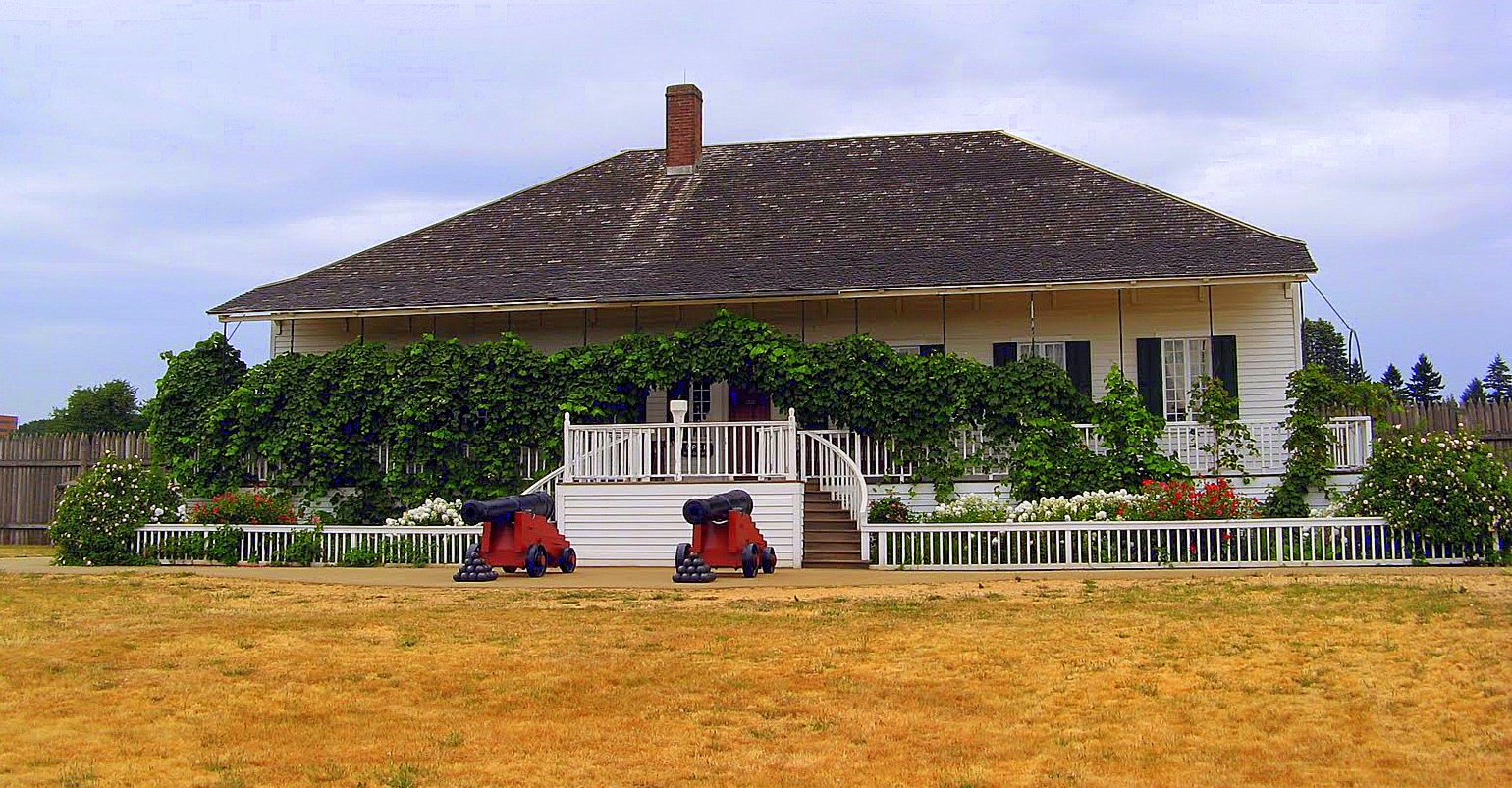
 The full tour takes about an hour and it introduces us to the buildings on the fort site by telling the stories of the people who used them. The fort commander's big white house is brought to life by telling the story of the officers' dinners he would host in the main dining room (and of the intimate lunches his wife hosted elsewhere in the house).
Fort Vancouver National Historic Site, in Vancouver, Washington features a recreated 1860s fur trading post on the banks of the Columbia River. They created a very good audio tour of the post buildings a few years ago -- before everyone had an iPod. So you have to check out a little audio player as you enter the post. The site's Web site has some podcasts created by its ambitious chief ranger, but the audio tour isn't available for download.
Each stop on the tour is a couple minutes long, and some stops give you the option to hear more information about a particular subject by keying in a number on the device. Otherwise, it tells you where to walk next and when next to hit the "play" button.
The narrator is excellent and the script is obviously written for the ear. It uses place well, often beginning with a statement like "Notice the expensive china on the table..." to focus your attention on one detail and then it broadens the narrative to make a larger point (in this case, it used the china to explain why certain luxuries were important to the people, even this far out on the frontier). The tour goes through the main buildings on the fort and talks a bit about modern-day archeology. It uses music and sound effects to good effect without going too far overboard.
I especially like the point as I walked between two buildings where the tour guide asks, "How many logs do you think make up the fort wall?" It acknowledged where I was and gave me a chance to look up and consider the scene in front of me in a way I wouldn't have otherwise.
When I visited, it was late on a weekday afternoon and there were very few visitors rangers around to interpret the site. So the tour was a huge help in understanding the hidden meanings behind the sights I was seeing.
In many ways the dedicated player is better than an iPod because it pauses automatically after each track and has an easy interface for getting more information. You don't want to spend too much of an audio tour explaining button-pushes and logistics. This device was well-suited to its content...and vice versa. Still, I wish it was available for download so people could come prepared...or listen to tour stops they missed after they leave.
There's more to this site than just the Hudson Bay Company fur trading fort, so plan on a few hours if you're visiting this neat park.
There's more to this site than just the Hudson Bay Company fur trading fort, so plan on a few hours if you're visiting this neat park.
Sunday, June 21, 2009
Next trip: Great Smoky Mountains
I found another little audio driving tour while researching my next vacation destination. Great Smoky Mountain Association has a series of podcasts about Great Smoky Mountains National Park, including a two-part driving tour along the main park road from Gatlinburg to Cherokee. It's actually four parts, but I'm assuming the south-to-north podcasts are the same at the north-to-south, repackaged. I'll take a listen while I'm there and find out for certain.
View Placecasting: Audio tours I've found in a larger map
I'm going to start collecting tours like these on a Google Map as I find them and get time to plot them. The very basic beginning of this undertaking is here. Eventually, I'd like to make a one-stop map where people could look for relevant audio content. As I and others have discovered, there's no great system for geotagging audio content. This means the explosion of mobile, location-aware devices can't really take advantage of the great place-based sound work people are creating around the globe.
By the way, if you know of other good place-based audio, please post them in the comments or use the link on the right to add an item of your own to the list I'm finding.
View Placecasting: Audio tours I've found in a larger map
I'm going to start collecting tours like these on a Google Map as I find them and get time to plot them. The very basic beginning of this undertaking is here. Eventually, I'd like to make a one-stop map where people could look for relevant audio content. As I and others have discovered, there's no great system for geotagging audio content. This means the explosion of mobile, location-aware devices can't really take advantage of the great place-based sound work people are creating around the globe.
By the way, if you know of other good place-based audio, please post them in the comments or use the link on the right to add an item of your own to the list I'm finding.
Sunday, May 31, 2009
Audio driving tour: the Mississippi River in Wisconsin
Radios were put into cars because audio is so good for multitasking, and that's the same reasonpodcasts are now giving radio stations a run for their money. People want something to listen to while they drive and if what they're listening to is about the world they're seeing around them, all the better!
Thus, audio driving tours are such a natural part of the placecasting concept. Here's a set of audio tours from my neck of the woods: the Mississippi River in Wisconsin. Thirty-three towns along the Wisconsin side of the river have banded together to create 33 podcasts about the environment and history in their area. They're calling the project Great River Road Stories and the site is full of other information about this beautiful stretch of country. (What's really impressive is that it looks like they created the audio tours 4 years ago, when podcasting was still very much in its infancy.)
View Larger Map
From Prescott to Keiler, the tours are 4-8 minute overviews of the history of each town the listener is about to pass through. Some towns have more interesting histories than others, of course, but by the end, a listener should have a good sense of what this landscape used to be like. I will definitely try to do this drive sometime this summer.
As I try to use my radio training to create this kind of place-based environmental journalism, I'm going to start collecting best (and worst) practices from the tours I hear. So, with all respect to the hard work of the team that put this impressive series together, here's my critique:
No matter the technology, storytelling is key. These Great River Road Stories are a wonderful service to visitors and residents alike, and they're just a re-write away from really engaging listeners' imaginations and connecting them with the environment of this beautiful part of the country.
Link: Great River Road Stories audio tours
Thus, audio driving tours are such a natural part of the placecasting concept. Here's a set of audio tours from my neck of the woods: the Mississippi River in Wisconsin. Thirty-three towns along the Wisconsin side of the river have banded together to create 33 podcasts about the environment and history in their area. They're calling the project Great River Road Stories and the site is full of other information about this beautiful stretch of country. (What's really impressive is that it looks like they created the audio tours 4 years ago, when podcasting was still very much in its infancy.)
View Larger Map
From Prescott to Keiler, the tours are 4-8 minute overviews of the history of each town the listener is about to pass through. Some towns have more interesting histories than others, of course, but by the end, a listener should have a good sense of what this landscape used to be like. I will definitely try to do this drive sometime this summer.
As I try to use my radio training to create this kind of place-based environmental journalism, I'm going to start collecting best (and worst) practices from the tours I hear. So, with all respect to the hard work of the team that put this impressive series together, here's my critique:
- Pro: While most of the tour is a narrator reading a script, the tour occasionally breaks up this monotony by cutting to local experts who talk about geology or history.
- Pro: The narrator gives clear but brief guidance about how to use the tour...in each case saying to pause the podcast until you've passed through the town just talked about
- Pro: There is a simple, unobtrusive music bed under all the sections. I think it's always the same music, which is too bad, but it adds energy and momentum to the items and makes them seem less like lectures
- Pro: There is a great diversity of information! History, environment and geology are all rolled in here and it's packed with facts and statistics.
- Pro: There are good human stories in many of the towns. Clearly, the writers made an effort to tell stories of particular events.
- Con: The narrator's pacing never changes. He doesn't pause when he switches topics from, say, history to geology. This leaves the listener no time to digest the points just made. A lot of the great facts and stats will never stay with a listener at a pace like this. The narrator uses no vocal tools to set off particular pieces of information. When everything has equal weight, everything becomes the lowest common denominator.
- Con: The script is not written for the ear. The narrator does a nice job navigating some long, clunky, passive sentences, but ultimately the script sounds like text lifted from a guidebook or museum display. Ears need short, active sentences written to paint pictures in the listeners' mind.
- Con: The script rarely references what the listener is actually seeing, or suggesting where to look when the listener gets to a particular location. This neglects one of the great advantages to this kind of journalism...you know where the consumer is and you can use that to enhance the story.
- Con: Too many numbers. It's hard to work numbers into a narrative. Distances, addresses, ages all need context for a listeners' brain to really understand what they mean. If that rock is 8-thousand years old, tell me why that's impressive. Don't tell me the address of the historical society...tell me where to turn when I drive through town. I'll be there shortly, after all.
No matter the technology, storytelling is key. These Great River Road Stories are a wonderful service to visitors and residents alike, and they're just a re-write away from really engaging listeners' imaginations and connecting them with the environment of this beautiful part of the country.
Link: Great River Road Stories audio tours
Subscribe to:
Posts (Atom)


